logo
मेसेज भेजें
Shenzhen Ofeixin Technology Co., Ltd
हमारे बारे में
आपका पेशेवर और विश्वसनीय साथी।
QOGRISYSग्राहकों को पूर्ण आईओटी कनेक्शन समाधान प्रदान करने के लिए पेशेवर रूप से प्रतिबद्ध है।कंपनी संचार उद्योग पर ध्यान केंद्रित करती है।उद्योग बाजार और ग्राहक सेवा के वर्षों के अनुभव के बाद, इसमें चरम तकनीकी चुनौतियों का सामना करने और ग्राहकों को कठिनाइयों को हल करने में मदद करने का साहस है।कंपनी के पास ब्रॉडबैंड लघु दूरी के वायरलेस कनेक्शन, व्यापक क्षेत्र नेटवर्क सेलुलर संचार से लेकर गहरे ऊर्ध्वाधर एकीकरण उद्योग तक उच्च गुणवत्ता वाले सहायक संसाधन हैं।ग्राहकों को सर्वव्यापी प्रदर्शन सेवाएं और ...
और जानें

0

स्थापना वर्ष

0

दस लाख+
कर्मचारी

0

दस लाख+
ग्राहकों की सेवा

0

दस लाख+
वार्षिक बिक्री
चीन Shenzhen Ofeixin Technology Co., Ltd उच्च गुणवत्ता
ट्रस्ट सील, क्रेडिट चेक, आरओएसएच और आपूर्तिकर्ता क्षमता मूल्यांकन। कंपनी के पास सख्ती से गुणवत्ता नियंत्रण प्रणाली और पेशेवर परीक्षण प्रयोगशाला है।
चीन Shenzhen Ofeixin Technology Co., Ltd विकास
आंतरिक पेशेवर डिजाइन टीम और उन्नत मशीनरी कार्यशाला। हम आपके लिए आवश्यक उत्पादों को विकसित करने के लिए सहयोग कर सकते हैं।
चीन Shenzhen Ofeixin Technology Co., Ltd विनिर्माण
उन्नत स्वचालित मशीनें, सख्ती से प्रक्रिया नियंत्रण प्रणाली हम आपकी मांग से परे सभी विद्युत टर्मिनलों का निर्माण कर सकते हैं।
चीन Shenzhen Ofeixin Technology Co., Ltd १००% सेवा
थोक और अनुकूलित छोटी पैकेजिंग, एफओबी, सीआईएफ, डीडीयू और डीडीपी। अपनी चिंताओं का सबसे अच्छा समाधान खोजने में हमारी सहायता करें।

गुणवत्ता वाईफाई7 मॉड्यूल & वाईफ़ाई HaLow मॉड्यूल उत्पादक

ऐसे उत्पाद खोजें जो आपकी आवश्यकताओं को बेहतर ढंग से पूरा करते हों।
मामले और समाचार
नवीनतम हॉट स्पॉट.
O9201UB प्रोजेक्टर उद्योग की वर्तमान स्थितिः वायरलेस कनेक्टिविटी के दर्द बिंदुओं को तत्काल सफलता की आवश्यकता है
चूंकि स्मार्ट प्रोजेक्टर आज तेजी से आम हो रहे हैं, इसलिए छवि की गुणवत्ता और कार्यक्षमता के लिए उपयोगकर्ता की मांग लगातार बढ़ रही है।वायरलेस कनेक्टिविटी की स्थिरता और गति उपयोगकर्ता अनुभव के उन्नयन में बाधा बन गई है: · 4K/8K सामग्री प्रसारण खटखटाहट: उच्च-रिज़ॉल्यूशन वीडियो के लिए अत्यधिक उच्च बैंडविड्थ की आवश्यकता होती है, और पारंपरिक वाई-फाई मॉड्यूल अक्सर जटिल वातावरण में देरी और बफरिंग से पीड़ित होते हैं। · बहु-उपकरणों के बीच गंभीर हस्तक्षेप: जब प्रोजेक्टर को एक साथ कई उपकरणों जैसे स्मार्टफोन, टैबलेट और स्पीकर से जोड़ा जाता है, तो नेटवर्क की भीड़ अक्सर सिग्नल में रुकावट का कारण बनती है। · खराब ब्लूटूथ परिधीय अनुभव: पुराने प्रोटोकॉल उच्च विलंबता और कमजोर विरोधी हस्तक्षेप क्षमताओं से पीड़ित हैं, जिसके परिणामस्वरूप वायरलेस स्पीकर, गेम नियंत्रक और अन्य उपकरणों के लिए अस्थिर कनेक्शन होते हैं। · बिजली की खपत और गर्मी के फैलाव के बीच संघर्ष: उच्च गति संचरण उच्च बिजली की खपत के साथ आता है, डिवाइस बैटरी जीवन को प्रभावित करता है और यहां तक कि गर्मी अपव्यय समस्याओं का कारण बनता है।       ये दर्दनाक बिंदु आपके ब्रांड की विश्वसनीयता को कम कर रहे हैं मैं.O9201UBमॉड्यूल: प्रोजेक्टर के लिए डिज़ाइन किया गया "वायरलेस हार्ट" QOGRISYS12 वर्षों से वायरलेस संचार में गहराई से शामिल है।वाई-फाई 6 + ब्लूटूथ 5.4 दोहरी मोड मॉड्यूलO9201UBप्रक्षेपण परिदृश्यों में वायरलेस अनुभव के पुनर्गठन के लिए चार मुख्य लाभों के साथ डिज़ाइन किया गया हैः 1.वाई-फाई 6 अल्ट्रा-स्पीड ट्रांसमिशन, 4K/8K चिकनी और निर्बाध अनंत · दो-बैंड समवर्ती, स्मार्ट स्विचिंग: 2.4GHz मजबूत दीवार-घुसपैठ क्षमता प्रदान करता है, गति 1200Mbps तक हो सकती है जबकि 5GHz, 2T2R DBAC और 1T1R DBDC मोड का समर्थन करता है,इंटरनेट पहुँच और स्क्रीन कास्टिंग के लिए विभिन्न आवृत्ति बैंडों के एक साथ उपयोग की अनुमति देना, अलविदा कहना मुड़मुड़ कर। · एमयू-एमआईएमओ + ओएफडीएमए प्रौद्योगिकी: एक साथ कई उपकरणों के बीच उच्च गति संचरण का समर्थन करता है, स्थिर और चिकनी प्रक्षेपण सुनिश्चित करता है, भले ही कई उपयोगकर्ता नेटवर्क साझा करें। · बीमफॉर्मिंग टेक्नोलॉजी: सटीक रूप से डिवाइस की स्थिति का पता लगाता है, गतिशील रूप से सिग्नल की ताकत को बढ़ाता है, और प्रोजेक्शन मृत क्षेत्रों को समाप्त करता है, जो कि लिविंग रूम या सम्मेलन में पूर्ण सिग्नल कवरेज सुनिश्चित करता है   ② ब्लूटूथ 5.4 + कम विलंबता, "शून्य धारणा" ऑडियो-वीडियो सिंक्रनाइज़ेशन · 2 एमबीपीएस हाई स्पीड ब्लूटूथ: वायरलेस स्पीकर्स/हेडफ़ोन28ms(औद्योगिक औसतः 50ms), "ऑडियो-वीडियो सिंक्रनाइज़ेशन" के साथ कॉन्सर्ट जैसे ऑडियो प्रभाव प्रदान करता है। · एएफएच एंटी-इंटरफेस टेक्नोलॉजी: स्वचालित रूप से भीड़भाड़ वाले 2.4G चैनलों से बचता है, जिससे कई उपकरणों (रिमोट कंट्रोल + माइक्रोफोन + स्पीकर) को हस्तक्षेप के बिना सह-अस्तित्व की अनुमति मिलती है, जो आवाज नियंत्रण के लिए "तत्काल प्रतिक्रिया" को सक्षम करता है। · एचसीआई प्रौद्योगिकी: एक मध्यवर्ती रिजर्व प्रदान करता है, कर्नेल संस्करणों के बीच संगत; यूएसबी इंटरफ़ेस ब्लूटूथ स्पीकर से भी जुड़ सकता है, प्रीमियम वॉयस इफेक्ट प्रदान करता है, डिबगिंग समय बचाता है,और पीसीएम इंटरफेस में पिन उपयोग को कम   ③ कॉम्पैक्ट आकार + कम बिजली की खपत, अधिक डिजाइन स्वतंत्रता · कॉम्पैक्ट आयाम: 15×13×2.3 मिमी का अल्ट्रा-छोटा आकार, अल्ट्रा-पतले प्रोजेक्टर डिजाइनों के लिए उपयुक्त, आंतरिक स्थान की बचत। · स्मार्ट पावर मैनेजमेंट: वाई-फाई + ब्लूटूथ सहयोगात्मक बिजली की खपत में 20% की कमी, अंतर्निहित बैटरी प्रोजेक्टर के चलने का समय 1.5 घंटे तक बढ़ाना, बाहरी कैंपिंग के दौरान निर्बाध सुनिश्चित करना   4.लचीला अनुकूलन, आसान एकीकरण · यूएसबी 2.0 इंटरफ़ेस: मुख्यधारा के प्रोजेक्टर मॉडल के साथ संगत, निर्माताओं के लिए विकास लागत में कमी। · कई प्रमाणपत्र: WPA3 एन्क्रिप्शन, BLE ऑडियो और अन्य मानकों का समर्थन करता है, जिससे डेटा सुरक्षा और संगतता सुनिश्चित होती है। ​​II.अब "वायरलेस प्रोजेक्शन" के नए नीले महासागर का लाभ उठाएं! वैश्विक स्मार्ट प्रोजेक्टर बाजार 2025 तक 80 बिलियन डॉलर से अधिक हो जाएगा, जिसमें वायरलेस अनुभव उपयोगकर्ताओं के लिए एक प्रमुख निर्णय लेने वाला कारक बन जाएगा।O9201UBन केवल "दृश्य उपकरण" हैं बल्किघरेलू मनोरंजन केंद्र, व्यावसायिक सहयोग केंद्र और स्मार्ट होम गेटवे। गृह मनोरंजन परिदृश्य: वायरलेस गेम स्क्रीन कास्टिंगः 4K@60fps कम विलंबता प्रसारण का समर्थन करता है, जो इमर्सिव ब्लूटूथ स्पीकर के साथ जोड़ा जाता है।स्मार्ट होम इंटीग्रेशन: स्क्रीन/लाइट्स को नियंत्रित करने के लिए प्रत्यक्ष वाई-फाई कनेक्शन, एक इमर्सिव थिएटर सिस्टम बनाना। व्यावसायिक कार्यालय परिदृश्य: बहु-उपकरणों के बीच बहु-उपकरणों के बीच वायरलेस स्क्रीन साझाकरणःकई टर्मिनलों से प्रदर्शनों का समर्थन करना, 50% तक बैठक दक्षता में सुधार करना। दूरस्थ सहयोग अनुकूलनः QoS बुद्धिमान बैंडविड्थ आवंटन वीडियो कॉन्फ्रेंस स्थिर सुनिश्चित करता है शैक्षिक परिदृश्य: ऑनलाइन कक्षा का आश्वासनः एंटी-इंटरफेरेंस डिजाइन 4K कोर्सवेयर को सुचारू रूप से प्रदर्शित करता है। इंटरैक्टिव शिक्षण सहायता: ब्लूटूथ माइक्रोफोन विलंबता < 30ms, शून्य-लैग शिक्षक-छात्र बातचीत को सक्षम करती है। III.चुननाO9201UBइसका मतलब है कि आप सिर्फ एक मॉड्यूल से अधिक प्राप्त करते हैं ▶उन्नत प्रौद्योगिकी, प्रदर्शन बेंचमार्क:IEEE 802.11ax और ब्लूटूथ 5.4 प्रोटोकॉल के आधार पर, प्रदर्शन पारंपरिक मॉड्यूल को पूरी तरह से पार करता है। ▶ सेवा आश्वासनः7x24 तकनीकी सहायता, "मॉड्यूल + ड्राइवर + परिदृश्य अनुकूलन" व्यापक सेवाएं प्रदान करता है। ▶ पारिस्थितिकी तंत्र सहयोग, विस्तार परिदृश्य:प्रोजेक्टरों के अलावा, यह स्मार्ट होम उपकरणों (जैसे, रोशनी, स्क्रीन), प्रोजेक्टर को स्मार्ट कंट्रोल हब में अपग्रेड करने में मदद करता है। निष्कर्ष: वायरलेस प्रोजेक्शन का भविष्य आप पर निर्भर करता है! दO9201UBमॉड्यूल, "तेज, स्थिर और कुशल" के अपने मुख्य लाभों के साथ, प्रोजेक्टर उद्योग के लिए अंतिम वायरलेस कनेक्टिविटी समाधान प्रदान करता है।चाहे वह होम थिएटर का अंतिम अनुभव हो या कुशल व्यावसायिक सहयोग, इसे आसानी से संभाला जा सकता है।QOGRISYS आपके साथ सहयोग करने के लिए तैयार है, तकनीकी नवाचार के माध्यम से उद्योग के परिवर्तन को आगे बढ़ाते हुए, और प्रत्येक प्रोजेक्टर को "वायरलेस स्वतंत्रता" का प्रवेश द्वार बनाते हुए!
Photovoltaic New Energy: The Most Certain Incremental Market for PLC Modules
In the first half of 2026, China's newly connected photovoltaic (PV) capacity reached 71.77 million kilowatts, of which distributed PV accounted for 42.22 million kilowatts, or approximately 58.8%. Globally, according to the "Global and China Distributed PV System Market In-Depth Research and Consulting Analysis Report (2026)" released by IIM Information, as of the first half of 2026, the global cumulative installed capacity of distributed PV had exceeded 480 GW, with the Asia-Pacific region contributing more than 55% of the increase. It is projected that by the end of 2026, the global annual new installed capacity will reach between 98 GW and 115 GW, representing a year-on-year increase of approximately 12% . The large-scale production of distributed photovoltaics is propelling PLC (Power Line Carrier Communication) modules into a certain incremental market. This certainty stems from the convergence of three factors: mandatory policy support, the uniqueness of the technological path, and the completion of commercial validation. I. Policy-driven: Component-level safe shutdown becomes a global mandatory requirement The core application scenarios for PLC modules in the photovoltaic field are module-level rapid shutdown and module-level monitoring. These two functions are directly driven by mandatory standards in major global markets. In the North American market, NEC 2026 further revised the fast shutdown requirements of Article 690.12. According to SurgePV's NEC 2026 Fast Shutdown Compliance Guide, the 2026 version of NEC retains the existing voltage limit targets: conductors outside the array boundary must be reduced to no more than 30V within 30 seconds, and conductors inside the array boundary must be reduced to no more than 80V within 30 seconds or use certified PVHCS equipment . This means that each photovoltaic module needs to be equipped with a shutdown device with PLC communication capabilities. In the European market, the EN50065-1 standard clearly specifies communication equipment applicable to the frequency range of 3kHz to 526.5kHz on low-voltage power lines. Its typical applications include DC bus communication between photovoltaic panels and inverters in photovoltaic power generation systems. In the Chinese market, the new national standard GB/T 34932-2025 officially came into effect on April 1, 2026. Under the "four requirements" for dispatching, it mandates that new grid-connected equipment must support standard interfaces, collect data at a frequency of no less than one point every five minutes, and enforce identity authentication, data encryption, and access control. In 2026, the EU carbon tariff adjustment mechanism enters the mandatory compliance phase. Traditional inverter-level monitoring cannot meet the accuracy requirements for component-level carbon footprint tracing, making component-level power electronics and intelligent monitoring a crucial technological path for obtaining accurate carbon emission data . The core policy shift is that PLC communication modules are transforming from "optional accessories" in photovoltaic systems into "compliance necessities." Whether it's North America's rapid shutdown, Europe's module-level monitoring, or China's "four capabilities," all require reliable data communication links between module-level devices. II. Technology Adaptation: Why PLCs are Irreplaceable in Photovoltaic Applications The physical structure of a photovoltaic system dictates the choice of communication scheme. Each photovoltaic panel is connected to a DC power line, and each inverter is connected to the grid via an AC power line. PLC communication can fully reuse existing power lines for data transmission, eliminating the need for additional communication cables or wireless access points. Metal roofs and complex electromagnetic environments pose significant challenges to the reliability of wireless communication, while PLCs, using power lines as the physical medium, possess strong anti-interference capabilities. Although RS485 bus solutions offer reliable communication, they require additional communication cabling within the photovoltaic array, increasing installation costs, construction time, and potential points of failure. In photovoltaic module-level shutdown and monitoring scenarios, PLCs offer virtually no equivalent alternatives. III. Commercialization Validation: From Technology Introduction to Mass Shipment The photovoltaic PLC module market has completed the crucial leap from "technology verification" to "mass shipment. " PLC chips have achieved mass production in the photovoltaic module-level power electronics field , and module-level shutdown devices and power optimizers with built-in PLC modules are being exported in bulk to overseas markets such as Southeast Asia, and are widely used in residential and commercial distributed photovoltaic scenarios. This large-scale market achievement demonstrates that PLC communication technology has undergone long-term operational verification in the complex electromagnetic environment of the photovoltaic DC side, maintaining a high level of communication online rate . From a market perspective, each GW of photovoltaic power requires approximately 2 million photovoltaic panels. If each panel is equipped with one shutdown chip, the global annual demand exceeds 400 million panels. Currently, North America and Europe have mandated that distributed photovoltaic projects have module-level rapid shutdown capabilities. If China introduces similar mandatory standards, it will bring an even larger volume of incremental demand. IV. Photovoltaic Scenarios Solution for Qogrisys PLC Modules Qogrisys has established a clear product portfolio in the PLC module field, with both the S130N-ISI and 3121N-H modules being officially listed as recommended solutions for photovoltaic communication scenarios . S130N-ISI: A compact solution for shutdown and optimizer The S130N-ISI is based on the Leadcore VC6330 chip design, integrating a 32-bit ARM Cortex-M3 MCU and a 32-bit DSP, embedded Flash, 1MB SRAM, and rich communication interfaces. The module uses an LCC package, measuring only 20.6×12.6×2.5mm, and features an integrated on-chip wire driver, low power consumption, strong noise immunity, and an operating temperature range of -40°C to +85°C . This module supports dual communication protocols: China SGCC Q/GDW 11612 and IEEE 1901.1, and supports BPSK, QPSK, and 16QAM modulation . The S130N-ISI's ultra-small size and low power consumption make it suitable for integration into space-constrained photovoltaic (PV) shutdown devices or power optimizers. These shutdown devices are powered by the PV panels themselves and need to continuously monitor PLC signals on the power line at microwatt-level power consumption; the S130N-ISI's low-power design aligns with this requirement. 3121N-H: Multi-node networking solution for component-level monitoring The 3121N-H is developed based on the HiSilicon PS0211 chip, operating in frequency bands of 0.5-3.7MHz and 2.5-5.7MHz. The protocol is based on a subset of the IEEE 1901.1 standard, with an application layer rate of 80Kbps, and is equipped with a 200MHz ARM Cortex-M3 processor. A single CCO supports up to 200 STA nodes , supports dynamic routing and multi-path automatic addressing, and a typical 200-node Layer 2 network can be formed within 10 seconds . The 3121N-H's multi-node networking capability adapts to the unified access requirements of multiple components and devices in distributed photovoltaic systems. In component-level monitoring solutions, the 3121N-H can serve as a PLC monitoring module within the component junction box, collecting voltage, current, and temperature data in real time and coupling it to the string via DC power lines. At the bus layer, this module can replace the traditional RS485 bus, enabling wireless bidirectional communication with inverters, data acquisition units, and cloud platforms. Conclusion Qogrisys has listed "new energy" as an independent application area, with its products clearly covering photovoltaic panels, photovoltaic inverters, energy storage, and charging piles. In scenarios such as smart streetlights, smart parking, and charging piles, Qogrisys's 3121N-H and S130N-ISI modules achieve reliable communication between devices through existing power lines, eliminating the need to lay separate communication lines for each terminal . Currently, Qogrisys is targeting emerging markets in Southeast Asia .    

2026

09/16

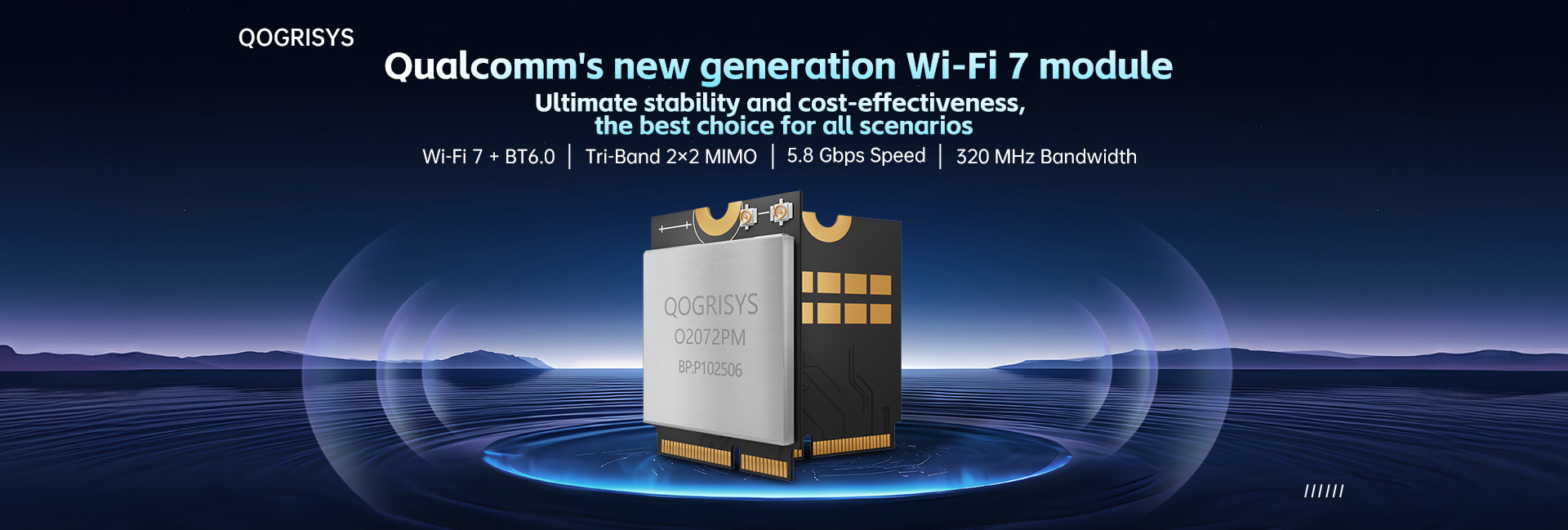
Wi-Fi 7 Modules: From High-Speed Pipeline to Intelligent Node – Industrial-Grade Sensory Integration
9th to 11th, 2026 , the 27th China International Optoelectronic Exposition (CIOE), in conjunction with the IICIE International Integrated Circuit Innovation Expo and Elexcon Shenzhen International Electronics Exhibition & Embedded Systems Exhibition, will be held concurrently at the Shenzhen World Exhibition & Convention Center. The three exhibitions will be held together, covering a total exhibition area of 320,000 square meters, bringing together more than 5,000 exhibitors and attracting over 240,000 professional visitors . This is a grand industry event covering the entire optoelectronics, semiconductor, and electronics industry chain.   For the Wi-Fi module industry, this exhibition sent a clear signal: the value proposition of Wi-Fi 7 modules is undergoing a fundamental shift—from providing "high-speed connectivity channels" to becoming "industrial-grade intelligent nodes" that integrate sensing, positioning, and edge intelligence. The Industry Logic Revealed by the Collaboration of Three Exhibitions: Why "Sensory Integration" Has Become a Must-Answer Question The essence of the three exhibitions working together is a forced "alignment" of the upstream and downstream of the industry chain. In the past, the optoelectronic industry focused on optical chips and devices, the semiconductor industry focused on chip design and advanced packaging, and the electronics industry focused on the development of terminal equipment and embedded systems. The three major industry systems were fragmented, with different technical standards and poor supply and demand matching, forming obvious industry barriers . The rapid popularization of large-scale AI models and supercomputing clusters has changed this landscape. The industry's demand for ultra-high bandwidth, ultra-low power consumption, and ultra-high integration has increased significantly. The previously independent industry boundaries have been completely broken down. Optical engines and switching chips are deeply integrated, and optoelectronic devices are directly embedded inside chip packages, forcing optical design, semiconductor processes, advanced packaging, and electronic systems to develop in a coordinated manner . This trend is particularly evident in the Wi-Fi module industry. Wi-Fi 7 is not only a generational upgrade in communication speed, but also provides a technological foundation for "integrated communication and sensing" due to its introduction of Multi-Link Operation (MLO), 320MHz channels, and fine-grained timing measurement capabilities. The China Academy of Information and Communications Technology (CAICT) explicitly proposed in its research report on 10 Gigabit AI Park Networks that wireless access points should be upgraded to "integrated communication and sensing" anchor points, natively integrating IoT access, environmental perception, and terminal positioning capabilities to break the data silos and protocol fragmentation dilemmas caused by traditional siloed network construction. The competitive logic in the module industry has therefore undergone a qualitative change: connectivity itself is "depreciating," and "intelligent connectivity" that integrates perception and edge intelligence is the new pricing power. The triple capability leap of Wi-Fi 7 modules The "integration" of Wi-Fi 7 modules is not a functional aggregation, but rather a fusion of capabilities at the underlying chip architecture level. Solutions represented by Qualcomm FastConnect C7700 (chip code name QCC2072) integrate three capabilities that previously belonged to different radio frequency domains on a single chip. The first capability: an industrial-grade leap in Wi-Fi 7 communication performance. The QCC2072 supports 320MHz channel bandwidth, 4096-QAM modulation, and 2×2 MU-MIMO, achieving a peak PHY rate of 5.8 Gbps . Its introduced Enhanced Multi-Link Single Radio (eMLSR) technology allows data to be transmitted through other links when interference occurs in a certain frequency band, effectively maintaining high throughput and low latency . This is crucial for deterministic transmission requirements in industrial environments. The second capability: Wi-Fi sensing and high-precision positioning. This chip solution supports IEEE 802.11az Wi-Fi ranging. 802.11az uses Time-of-Flight (ToF) technology to measure the actual distance between the device and the access point, replacing the traditional RSSI fingerprint comparison method, achieving sub-meter positioning accuracy of less than 1 meter. In industrial scenarios, this means that the Wi-Fi module can not only transmit data but also accurately sense the device's location and spatial status. The third capability: Bluetooth 6.0 Channel Sounding and Aux Radio. Bluetooth 6.0 introduces Channel Sounding technology, improving Bluetooth positioning accuracy to sub-meter levels . Simultaneously, this solution is equipped with a dedicated Wi-Fi Aux Radio for background scanning and low-latency listening while the main radio is in sleep mode, balancing power consumption and response speed . The integration of these three capabilities enables a single Wi-Fi 7 module to possess integrated "communication + sensing + positioning" capabilities for the first time. VOXMICRO's AIRETOS C27 industrial-grade module is a typical example of this architecture. It integrates capabilities that were previously belonging to three independent radio frequency domains into a single module package, enabling industrial OEMs to shift their design goals from "adding a radio" to "accomplishing more tasks with a single industrial-grade module" . Market data: The inflection point for the large-scale deployment of Wi-Fi 7 modules has arrived. The global Wi-Fi module market is currently experiencing a period of structural growth. According to market research reports, the global Wi-Fi module market size is projected to reach US$16.82 billion in 2026, a 17.9% increase from US$14.27 billion in 2025. Among these, Wi-Fi 7 modules are rapidly increasing their market share to 17.2%, with projected shipments reaching 234 million units for the year . From a broader perspective, the global Wi-Fi 7 module market was valued at $3.8 billion in 2025 and is projected to reach $22.6 billion by 2034, representing a CAGR of 21.9% . The Wi-Fi Alliance predicts that global shipments of Wi-Fi 7 devices will reach approximately 1.1 billion units in 2026, of which approximately 196 million will be IoT devices. The Industrial Internet of Things (IIoT) is one of the fastest-growing sub-sectors. Global demand for IIoT modules is projected to reach $9.81 billion, with an annual growth rate of 17.8% . The reliability requirements of industrial applications—wide operating temperature range, interference resistance, and deterministic low latency—are driving the accelerated evolution of Wi-Fi 7 modules from consumer to industrial applications. Qogrisys early strategic moves: from chip solutions to module productization O2072PM and O2072PB, launched simultaneously by O2072 with the QCC2072 chip, is not simply an expansion of the product line, but rather an engineering choice for different deployment scenarios. The O2072PM uses an M.2 Key E standard interface (2230 specification), a 2T2R dual-antenna design, and supports both Wi-Fi and Bluetooth operation. This module incorporates all the functions of the QCC2072: the Wi-Fi portion covers the full IEEE 802.11a/b/g/n/ac/ax/be standards, supporting tri-band 2.4 GHz/5 GHz/6 GHz, with a channel bandwidth of up to 40 MHz at 2.4 GHz, 160 MHz at 5 GHz, and 320 MHz at 6 GHz. The Bluetooth portion is compatible with Bluetooth 6.0, supporting LE Audio, 2 Mbps BLE, and high-precision distance measurement (HADM channel sounding) . In terms of driver adaptation, the O2072PM has been adapted and is running stably on Intel x86 platforms with kernels 5.15.24+, 6.1.99, and 6.12.0. The O2072PB uses a 13×15mm surface mount package, targeting space-constrained embedded scenarios. Its core functions are identical to the O2072PM, also supporting a peak data rate of 5.8 Gbps, a 320MHz channel, 4K QAM modulation, Bluetooth 6.0 channel detection, and 802.11az Wi-Fi ranging . The O2072PB explicitly supports various operating modes including AP/AP+STA/P2P/Monitor, providing a PCIe interface for Wi-Fi and a UART/PCM interface for Bluetooth, supporting Class 1 and Class 2 power level transmission without the need for an external power amplifier . The differentiated positioning of the two modules reflects a profound change in the module industry: as chip capabilities become highly integrated, the core competitiveness of module manufacturers is shifting from "how much throughput can be achieved" to "whether the full capabilities of the chip can be efficiently released under specific physical constraints." The M.2 interface module targets industrial PCs, gateways, and edge computing devices that require standard slots and replaceable designs; the surface-mount module targets embedded terminals with extremely limited PCB space, requiring module manufacturers to possess more refined engineering capabilities in RF design, antenna matching, and thermal management. Validation in industrial scenarios: from technical feasibility to deployment Wi-Fi 7 sensing technology is being practically validated in industrial scenarios. In the mining sector, Shanxi Coal International's Hequ Open-pit Coal Mine's pilot project of a 10-gigabit optical network based on 50G-PON + Wi-Fi 7 has passed the Ministry of Industry and Information Technology's acceptance test. Fifty-seven Wi-Fi 7 gateways have been deployed in the core area, allowing dispatchers to remotely control unmanned mining trucks several kilometers away via Wi-Fi 7 tablets. In the field of smart buildings, the Longgang International Art Center uses Wi-Fi 7 + CSI sensing technology to accurately detect the presence of people, achieving a reduction of over 15% in venue energy consumption and a 30% improvement in operation and maintenance efficiency . These cases share a common characteristic: Wi-Fi networks are no longer just for data transmission, but have also become the infrastructure for environmental sensing and spatial positioning. For the module industry, this means that downstream customers' needs are upgrading from "providing stable wireless connectivity" to "providing integrated capabilities that converge connectivity, sensing, and positioning." Conclusion The industry landscape revealed by the three exhibitions is clear and definite: the demand for AI computing power is driving the deep integration of the optoelectronics, semiconductor, and embedded electronics industries, and Wi-Fi 7 modules are at the intersection of this integration. The shift from "high-speed connectivity" to "integrated sensing" is not just a product iteration, but a systemic reconstruction of the value proposition of the module industry. For Wi-Fi module manufacturers, their ability to establish competitive advantages in chip solution integration, cross-platform adaptation, and industrial-grade reliability will determine their position in the new industry cycle. However, the real test lies in whether module manufacturers can continue to efficiently translate chip capabilities into deployable industrial-grade products as "integrated sensing" transitions from a technological trend to an industry standard.  

2026

09/14

छोटा आकार, कम बिजली की खपत, उच्च स्थिरता: परम IoT मॉड्यूल समाधान
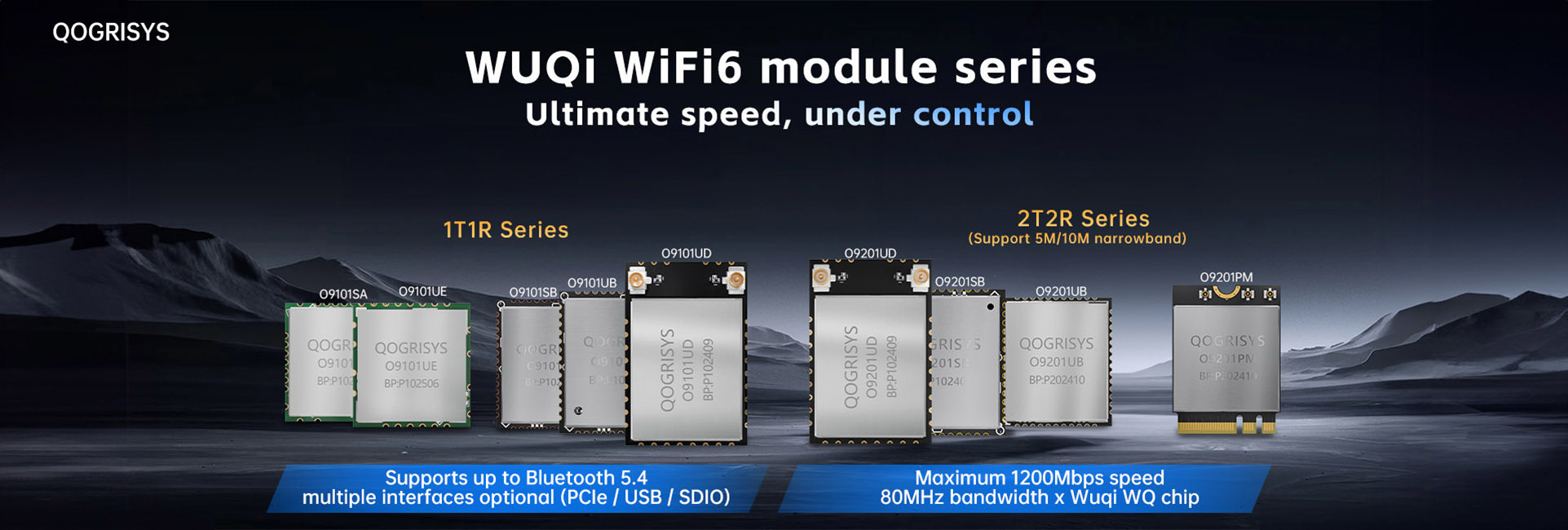
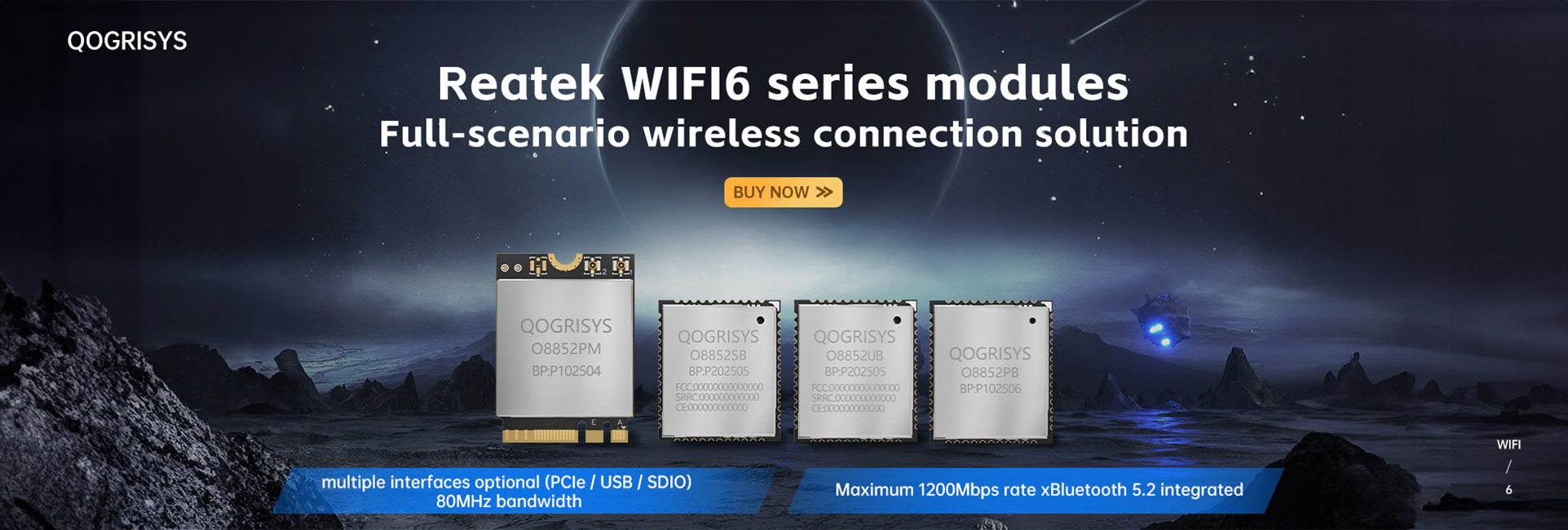
आईओटी टर्मिनलों का "असंभव त्रिभुज" IoT टर्मिनलों के तेजी से पुनरावृत्ति के साथ, अधिक से अधिक उपकरण लघुकरण और बैटरी शक्ति की ओर बढ़ रहे हैं, जबकि उत्पादों को डिजाइन चुनौतियों का सामना करना पड़ रहा है जैसे किसीमित पीसीबी स्थान, अपर्याप्त बैटरी जीवन, और अस्थिर वायरलेस कनेक्टिविटी। यह एक विशेष उप-क्षेत्र में एक अलग घटना नहीं है, बल्कि यह पूरे इंटरनेट ऑफ थिंग्स (IoT) उद्योग के सामने एक प्रणालीगत चुनौती है। 2026 में, वायरलेस मॉड्यूल की वैश्विक शिपमेंट 870 मिलियन यूनिट तक पहुंच गई, जिसका बाजार आकार 41.2 बिलियन अमेरिकी डॉलर से अधिक है। 2030 तक, वैश्विक शिपमेंट 1.52 बिलियन यूनिट तक बढ़ने का अनुमान है,11 के सीएजीआर के साथ.8%, और बाजार का आकार 79.8 बिलियन अमेरिकी डॉलर तक पहुंचने की उम्मीद है। इसी अवधि के दौरान, दुनिया भर में कनेक्टेड IoT उपकरणों की संख्या 39 बिलियन से अधिक होने की उम्मीद है।उपकरणों की संख्या में यह विस्फोटक वृद्धि प्रत्येक डिजाइन आयाम की चुनौतियों को उत्पाद की सफलता या विफलता को निर्धारित करने वाले प्रमुख कारकों में बढ़ा रही है. छोटे आकार, कम बिजली की खपत, और उच्च स्थिरता - ये तीन आवश्यकताएं IoT टर्मिनल डिजाइन में "असंभव त्रिकोण" बना रही हैं।पारंपरिक समाधानों में ये तीनों अक्सर एक दूसरे को बाधित करते हैंः छोटे आकार का पीछा करने से एंटीना का प्रदर्शन सीमित होता है, कम बिजली की खपत का पीछा करने से संचरण दर का बलिदान होता है,और स्थिरता का पीछा बिजली की खपत और आकार में वृद्धिइन तीनों के बीच संतुलन बनाना मॉड्यूल समाधान प्रदाताओं के लिए एक प्रमुख मुद्दा बन गया है। II. चुनौती 1: अत्यधिक संकुचित पीसीबी स्थान अंतरिक्ष संपीड़न का औद्योगिक प्रेरक बल स्मार्ट रिंग और टीडब्ल्यूएस इयरफ़ोन से लेकर माइक्रो सेंसर और स्मार्ट लॉक तक, टर्मिनल उपकरणों का भौतिक स्थान लगातार संकुचित हो रहा है। माइक्रो बैटरी बाजार में $ 1 से बढ़ने का अनुमान है।2025 में 59 अरब डॉलर तकवर्ष 2026 तक यह 13.5% की सीएजीआर का प्रतिनिधित्व करता है।माइक्रो बैटरी बाजार में तेजी से वृद्धि डिवाइस लघुकरण की ओर प्रवृत्ति का प्रत्यक्ष प्रतिबिंब है¥उपकरण जितना छोटा होगा, बैटरी वॉल्यूम और ऊर्जा घनत्व के लिए आवश्यकताएं उतनी ही अधिक होंगी। हार्डवेयर इंजीनियरों के सामने सबसे चुनौतीपूर्ण समस्याओं में से एक उच्च घनत्व प्राप्त करना है,उच्च स्थिरता विद्युत कनेक्शन के बीच बेटीबोर्ड और मदरबोर्ड के तहत अत्यंत सीमित समग्र डिवाइस मोटाई और पीसीबी अंतरिक्षउपकरण में एक अपरिहार्य रेडियो आवृत्ति घटक के रूप में, वायरलेस मॉड्यूल का पदचिह्न सीधे उपकरण के समग्र लेआउट की व्यवहार्यता को निर्धारित करता है। लघु मॉड्यूल के लिए समाधान पथ उद्योग कई दृष्टिकोणों से स्थानिक चुनौतियों का सामना कर रहा है। Qogrisys के O9101SA मॉड्यूल ने अपने आकार को संकुचित कर दिया है12×12 मिमी, जबकि 600Mbps तक की गति के साथ दोहरे बैंड वाई-फाई 6 और बीएलई 5.4 का समर्थन करता है। यह आकार वाई-फाई 6 + ब्लूटूथ कॉम्बो मॉड्यूल के लिए उद्योग के अग्रणी स्तरों में से एक है।यह चरम आकार में कमी न केवल अधिक स्थान में पैक करने के लिए अनुमति देता है, लेकिन बैटरी, सेंसर और मुख्य नियंत्रण चिप जैसे अन्य घटकों के लिए मूल्यवान पीसीबी स्थान को भी मुक्त करता हैभंडारण। बहु-प्रोटोकॉल एकल-चिप एकीकरण एक और महत्वपूर्ण मार्ग है।दो स्वतंत्र मॉड्यूल, साथ ही उनके संबंधित परिधीय सर्किट और एंटीना क्लीयरेंस, एक एकल बहु-प्रोटोकॉल एकीकृत मॉड्यूल की तुलना में बहुत बड़ा पीसीबी क्षेत्र पर कब्जा करते हैं।छोटे आकार के उत्पादों जैसे स्मार्ट बल्ब और पैनल स्विच मेंवाई-फाई/ब्लूटूथ कॉम्बो समाधान एक ही चिप में दोनों प्रोटोकॉल को एकीकृत करके पीसीबी पदचिह्न को मौलिक रूप से कम करता है। एंटेना द्वारा कब्जा किया गया क्षेत्र भी महत्वपूर्ण है। पारंपरिक एंटेना कार्यान्वयन मोबाइल उपकरणों और आईओटी अनुप्रयोगों में कुल पीसीबी क्षेत्र का 15%-25% खपत करते हैं।एंटीना-इन-पैकेज (एआईपी) तकनीक के उदय से एंटीना को मॉड्यूल पैकेज में एकीकृत किया जाता है, जिससे 40%-60% स्थान की बचत होती है. चुनौती 2: बैटरी का जीवन बहुत कम सीमा चिंता का अर्थशास्त्र बैटरी-संचालित IoT उपकरणों के लिए, बैटरी जीवन एक "अच्छा होना" नहीं है, बल्कि "जीवन या मृत्यु" का मुद्दा है। वैश्विक आईओटी बैटरी बाजार का मूल्य 2024 में 15.9 बिलियन डॉलर था और 2033 तक यह बढ़कर 36.88 बिलियन डॉलर हो जाएगा, जो 9.8% की सीएजीआर का प्रतिनिधित्व करता है।बैटरी संचालित नोड्स का परिचालन जीवन काल सीधे रखरखाव लागत और तैनाती स्केलेबिलिटी को प्रभावित करता है. कम बिजली की खपत वाली प्रौद्योगिकी का औद्योगिक मूल्य कम बिजली वाले वाई-फाई मॉड्यूल बाजार का अनुमान 2025 में $4.142 बिलियन और 2032 में $11.79 बिलियन तक पहुंचने का है, जो 16.4% की सीएजीआर का प्रतिनिधित्व करता है। बीएलई मॉड्यूल बाजार में $68 तक बढ़ने की उम्मीद है।2032 तक 27 अरब, 13.80% की सीएजीआर के साथ।इन दोनों सेगमेंटों की मजबूत वृद्धि से पुष्टि होती है कि कम बिजली की खपत मॉड्यूल उद्योग में सबसे महत्वपूर्ण प्रतिस्पर्धी आयामों में से एक बन गई है। IV. चुनौती 3: अस्थिर वायरलेस कनेक्शन भीड़भाड़ 2.4GHz और सीमित एंटेना अस्थिर वायरलेस कनेक्शन का मूल कारण दो संरचनात्मक विरोधाभासों में निहित है। पहली समस्या आवृत्ति की भीड़ है।2.4GHz ISM बैंड को कई प्रोटोकॉल जैसे वाई-फाई, ब्लूटूथ, ज़िगबी और थ्रेड द्वारा साझा किया जाता है, जिसके परिणामस्वरूप गंभीर सह-चैनल हस्तक्षेप होता है।उच्च घनत्व वाले तैनाती परिदृश्यों में जैसे स्मार्ट घर और कार्यालय, सिग्नल संघर्ष और डेटा दर में गिरावट आम बात है। दूसरा विरोधाभास एंटेना के प्रदर्शन की सीमा है।उपकरण के लघुकरण का अर्थ है कि एंटीना के लिए उपलब्ध स्थान संकुचित हो जाता है, और एंटीना दक्षता और बैंडविड्थ तदनुसार कम हो जाती है।रेडियो आवृत्ति प्रदर्शन और उपकरण के आकार के बीच एक अंतर्निहित भौतिक बाधा है¥एन्टेना का आकार जितना छोटा होगा, विकिरण दक्षता उतनी ही कम होगी और संचार दूरी और स्थिरता उतनी ही खराब होगी। वी.कुग्रिसिसप्रणालीगत समाधान उपर्युक्त तीनों डिजाइन चुनौतियों का सामना करने के लिए, QOGRISYS एक व्यापक उत्पाद पोर्टफोलियो प्रदान करता है, जो चिप्स से मॉड्यूल और हार्डवेयर से सॉफ्टवेयर तक एंड-टू-एंड समाधान प्रदान करता है। अत्यंत लघु उत्पाद मैट्रिक्स Qogrisys ने छोटे आकार के मॉड्यूल के क्षेत्र में वाई-फाई 6 से वाई-फाई 5 और कॉम्बो से सिंगल वाई-फाई तक पूर्ण कवरेज हासिल किया है। O9101SAएक कॉम्पैक्ट आकार का दावा करता है12×12 मिमी, 600 एमबीपीएस तक की गति के साथ दोहरे बैंड वाई-फाई 6 और बीएलई 5.4 का समर्थन करता है, और एसडीआईओ 3.0 इंटरफ़ेस का उपयोग करता है। यह 2.4GHz/5GHz दोहरे बैंड समवर्ती (डीबीएस) वास्तुकला का समर्थन करता है,अपलिंक/डाउनलिंक MU-OFDMA और MU-MIMO, और बीटी/बीएलई दोहरी मोड ऑपरेशन।O9101SA, O9101UE और O9101UD के साथ, WQ9101 चिप के आधार पर विकसित Oufixin 1 × 1 वाई-फाई 6 मॉड्यूल श्रृंखला से संबंधित है. O9101UE का आयाम 13×12.2 मिमी है और USB 2.0 इंटरफ़ेस का उपयोग करता है; O9201SB का आयाम केवल 13×15 मिमी है, यह भी WQ9201 चिप पर आधारित है, और 1200Mbps तक की गति प्रदान करता है।O9201UB O9201SB के समान प्लेटफ़ॉर्म साझा करता है और USB 2 का उपयोग करता है.0 इंटरफ़ेस। O8852PB का आयाम 13×15 मिमी है, यह रियलटेक RTL8852BE चिप पर आधारित है, 1200Mbps की गति के साथ वाई-फाई 6 और ब्लूटूथ 5.2 का समर्थन करता है, और एक पीसीआईई इंटरफ़ेस का उपयोग करता है।अधिक सख्त स्थान संबंधी बाधाओं वाले परिदृश्यों के लिएइन मॉड्यूलों का छोटा आकार विशेष रूप से फायदेमंद है।छोटे मॉड्यूल पदचिह्न से बैटरी, सेंसर और मुख्य नियंत्रण चिप जैसे अन्य घटकों के लिए मूल्यवान पीसीबी स्थान मुक्त होता है। कम बिजली का डिजाइनः चिप से सिस्टम तक सह-अनुकूलन Qogrisys की कम शक्ति क्षमता मुख्य रूप से अपस्ट्रीम चिप्स के चयन और गहरे सहयोग से उत्पन्न होती है।अंतरराष्ट्रीय स्तर पर अग्रणी कम बिजली की खपत, 280 चिप कंपनियों के 364 उत्पादों में से उभरा, जिसने 2024 "चीन चिप" उत्कृष्ट तकनीकी नवाचार उत्पाद पुरस्कार जीता। हस्तक्षेप प्रतिरोध और स्थिर कनेक्शनःडुअल-बैंड और मल्टी-प्रोटोकॉल एकीकरण में सफलता की प्रौद्योगिकियां O9201SB, O9101UE, और O8852PB सभी 2.4GHz/5GHz डुअल-बैंड वाई-फाई 6 का समर्थन करते हैं।दोहरे बैंड वास्तुकला का मूल मूल्य "चयनशीलता" में निहित है जब 2.4GHz बैंड ब्लूटूथ और ज़िगबी जैसे प्रोटोकॉल के सह-अस्तित्व के कारण भीड़भाड़ हो जाता है,डिवाइस ट्रांसमिशन गति और कनेक्शन स्थिरता सुनिश्चित करने के लिए 5GHz बैंड पर स्विच कर सकते हैं. ड्यूल-बैंड वाई-फाई 6 में ओएफडीएमए और एमयू-एमआईएमओ जैसी मुख्य प्रौद्योगिकियां भी शामिल हैं, जो कई समवर्ती उपकरणों के साथ परिदृश्यों में स्पेक्ट्रम उपयोग दक्षता में सुधार करती हैं।उच्च घनत्व वाले तैनाती वातावरण जैसे स्मार्ट घर और कार्यालयों में, इन प्रौद्योगिकियों का सीधा अनुवाद बेहतर उपयोगकर्ता अनुभव में होता है, कम विलंबता, कम गिरावट वाले कनेक्शन और अधिक स्थिर कनेक्शन। मल्टी-प्रोटोकॉल एकीकरण एक और दृष्टिकोण है। एक एकल मॉड्यूल एक साथ कई प्रोटोकॉल जैसे वाई-फाई, ब्लूटूथ, ज़िगबी और थ्रेड का समर्थन कर सकता है,और पर्यावरण के अनुसार बुद्धिमानी से सबसे अच्छा कनेक्शन विधि का चयन कर सकते हैं, विभिन्न परिदृश्यों के बीच लचीलापन से स्विच करना। VI. उद्योग परिप्रेक्ष्यः "उपयोगी" से "प्रभावी" तक वर्ष 2026-2032 तक छोटे आकार के कम बिजली वाले मॉड्यूलों के डिजाइन की प्रवृत्ति निम्नलिखित दिशाओं में विकसित होती रहेगी। सबसे पहले, आकार की सीमाओं को तोड़ना जारी रहेगा.मॉड्यूल के आकार के लिए प्रतिस्पर्धा समाप्त होने से बहुत दूर है और भौतिक सीमाओं के निकट आने से पैकेजिंग प्रौद्योगिकी में निरंतर नवाचार करने के लिए मजबूर किया जा रहा है। दूसरा, कम बिजली की खपत एक "विशेषता" से एक "मानक विशेषता" में बदल जाएगी।QYResearch के आंकड़ों से पता चलता है कि कम बिजली वाले वाई-फाई मॉड्यूल बाजार में 16.4% की वार्षिक वृद्धि दर के साथ विस्तार जारी रहेगा।कम बिजली की खपत अब हाई-एंड मॉड्यूल के लिए एक अलग बिक्री बिंदु नहीं होगी, बल्कि सभी मॉड्यूल उत्पादों के लिए एक बुनियादी आवश्यकता होगी। तीसरा, बहु-प्रोटोकॉल एकीकरण, लघुकरण और कम बिजली की खपत गहराई से जुड़ी होगी।वाई-फाई, ब्लूटूथ, ज़िगबी और थ्रेड जैसे कई प्रोटोकॉल को एक चिप में एकीकृत करना अंतरिक्ष और बिजली की खपत के मुद्दों का एक मौलिक समाधान है।मैटर प्रोटोकॉल को व्यापक रूप से अपनाए जाने से यह प्रवृत्ति और मजबूत होगी।भविष्य के मॉड्यूलों में अब उपयोगकर्ताओं को प्रोटोकॉल "चयन" करने की आवश्यकता नहीं होगी, बल्कि वे पर्यावरण और अनुप्रयोग के आधार पर स्वतः ही इष्टतम कनेक्टिविटी समाधान के अनुकूल होंगे। चौथा, मॉड्यूल चयन "घटक खरीद" से "रणनीतिक निर्णय लेने" में विकसित हो रहा है।लघुकरण और कम बिजली की खपत की दोहरी बाधाओं के तहत, मॉड्यूल चयन अब केवल तकनीकी मापदंडों की तुलना नहीं है,लेकिन उत्पाद परिभाषा के संबंध में एक रणनीतिक विकल्पएक उपयुक्त मॉड्यूल समाधान को विकसित किया जा सकता है।विकास चक्र को महीनों से लेकर हफ्तों तक संकुचित करेंऔरचार परत वाले पीसीबी को दो परत वाले पीसीबी में सरल करें.  

2026

09/09